What Are China Top Custom Metalworking Manufacturers?
China’s custom manufacturing base is vast, but size alone does not identify a reliable supplier. In 2024, China produced about 1.005 billion tonnes of crude steel, according to the World Steel Association’s annual production data. That scale supports a deep network of mills, fabricators, CNC workshops, stamping plants, and finishing specialists. Yet steel capacity is not the same as manufacturing quality.
This guide examines China’s top Custom Metalworking manufacturers through practical buyer criteria. These include machining tolerance, material traceability, inspection equipment, production capacity, export experience, and communication discipline. The China Machine Tool Industry Association continues to track China’s machine-tool sector, where automation and digital production remain important development themes. Reports from the International Federation of Robotics also show China as the world’s largest industrial robot market, supporting broader factory automation.
Look closely at the details. A capable supplier should explain its process from CAD drawing to first-article inspection. It should identify the alloy, cutting method, surface treatment, and measurement standard. Photos of a clean workshop help, but they prove little. This is where many supplier comparisons become too optimistic.
No ranking is perfect. A large manufacturer may overlook a small batch. A compact workshop may deliver excellent prototypes but struggle with volume. Buyers should request recent inspection records, sample parts, certification evidence, and clear delivery terms. The strongest choice is not always the biggest name. It is the manufacturer that repeatedly matches specifications, documents deviations, and responds before problems become expensive.
What Defines a Top Custom Metalworking Manufacturer in China?
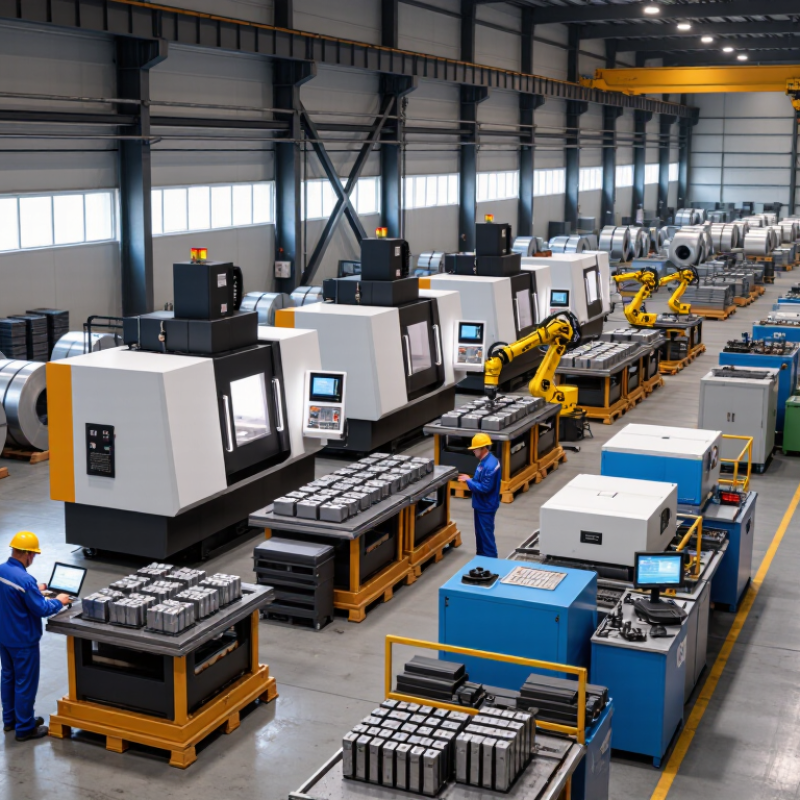
A top custom metalworking manufacturer in China is defined by controlled process, not impressive photographs. The workshop should show clear material flow, calibrated machines, and trained operators. Laser cutting must hold consistent dimensions across repeated batches. Bending angles need measured verification, not visual guesses. Small details matter.
Reliable manufacturers provide material certificates, inspection records, and batch traceability. They explain tolerances before production begins. A capable quality team may use calipers, height gauges, or coordinate measuring equipment. They also test weld penetration, surface finish, and coating adhesion when required. Samples should reveal realistic production quality, not carefully selected exceptions. Ask difficult questions.
Communication is another practical measure of professionalism. Engineers should identify design risks, suggest manufacturable changes, and explain cost effects clearly. During factory assessments, response speed can be useful, but technical accuracy matters more. No manufacturer is flawless. Even experienced teams may miss a drawing revision or underestimate packaging damage. What matters is whether they document the mistake and prevent repetition. Some suppliers promise every capability, yet outsource critical operations without disclosure. That weakens trust. A dependable partner states its limits, shares production evidence, and accepts reasonable audits. Consistent records, honest limitations, and stable workmanship define a top custom metalworking manufacturer more than low pricing ever can.
What Defines a Top Custom Metalworking Manufacturer in China?
This chart presents a practical 100-point evaluation framework for comparing custom metalworking suppliers. Quality systems, engineering capability, process coverage, material traceability, delivery reliability, and export compliance are key indicators of a capable manufacturing partner.
Which Metalworking Services Do Chinese Manufacturers Commonly Provide?
China’s top custom metalworking manufacturers usually support projects from early prototypes to stable production. Common services include CNC milling, CNC turning, laser cutting, stamping, bending, and precision sheet metal fabrication. Many workshops also provide welding, riveting, tube processing, and small mechanical assemblies. A capable supplier can work with aluminum, stainless steel, carbon steel, copper, and engineering alloys.
Surface treatment is another important service. Options may include anodizing, powder coating, plating, polishing, brushing, and heat treatment. Reliable manufacturers normally connect these processes with dimensional inspection and material verification. Ask for inspection reports, equipment details, and sample parts before placing a large order. Not every factory controls outsourced finishing equally well. That difference can affect color, corrosion resistance, and delivery time.
Tips: Send clear drawings with tolerances, materials, quantities, and surface requirements. Request a first-article sample. Check critical dimensions with your own measuring equipment when possible. Discuss packaging early, especially for thin panels or polished parts. A short video call can reveal production details, but it cannot replace documented quality records. Be careful with vague claims such as “high precision” without stated tolerances. Some project decisions may need revision after testing, and that is normal. Good suppliers should explain limitations instead of hiding them.
How to Compare China’s Leading Custom Metalworking Manufacturers
Comparing China’s leading custom metalworking manufacturers requires more than checking price lists. Start with technical fit. Review their experience with CNC machining, sheet metal fabrication, welding, or precision casting. Ask whether they have produced parts with similar materials, dimensions, and tolerances. A capable supplier should explain its process clearly, not simply promise “high quality.”
Ask for evidence. Request sample inspection reports, material certificates, process records, and photographs of finished parts. Check whether measuring equipment is calibrated and whether inspectors use tools suited to your tolerance range. A factory that reports a 0.01 mm tolerance should explain how it achieves and verifies it. Vague answers deserve caution. Measure twice.
Production capacity also matters. Compare equipment lists, shift arrangements, maintenance routines, and realistic monthly output. A small workshop may deliver excellent prototypes but struggle with repeat orders. A large facility may offer capacity but provide less attention to complex revisions. This trade-off is easy to overlook. I would compare pilot batches before approving full production. Review packaging, labeling, lead-time control, and communication during that trial.
Reliability includes corrective action. When a sample fails, ask how the manufacturer identifies the cause and prevents repetition. Check response times, engineering support, export documentation, and contract clarity. Factory audits can reveal crowded work areas, weak material labeling, or organized quality systems that online profiles never show. No comparison is perfect. Even a strong supplier may need closer supervision during the first production cycle.
How to Select the Right Chinese Metalworking Manufacturing Partner
Selecting a Chinese metalworking partner requires more than comparing quotation sheets. China produced about 1.005 billion tonnes of crude steel in 2024, representing roughly 53% of global output, according to World Steel Association data. This scale offers strong material access, but capacity does not guarantee consistent machining or fabrication quality.
During supplier audits, I examine drawings, inspection records, and actual production samples. Ask for dimensional reports, material certificates, welding qualifications, and calibration dates. A polished factory tour can still mislead. Review the supplier’s ISO 9001 certification through its certification body, not only a scanned certificate. The ISO Survey 2023 recorded more than one million ISO management-system certificates worldwide, showing why certification should support verification rather than replace it.
Define tolerances, surface-finish standards, packaging, and acceptance rules before requesting samples. For CNC work, compare repeatability across several batches, not one impressive part. For sheet metal, inspect bend consistency, weld penetration, and edge treatment under practical lighting. The OECD’s Trade in Value Added data also highlights the complexity of international production networks; clarify which processes are outsourced and where final inspection occurs. Ask about backup equipment and realistic monthly capacity. Cheap quotes often exclude tooling, rework, freight, or engineering changes. I have found that communication speed matters as much as machine capability. Use a paid pilot order, record every deviation, and allow room for honest correction. Perfect suppliers are rare. Transparent suppliers are safer.